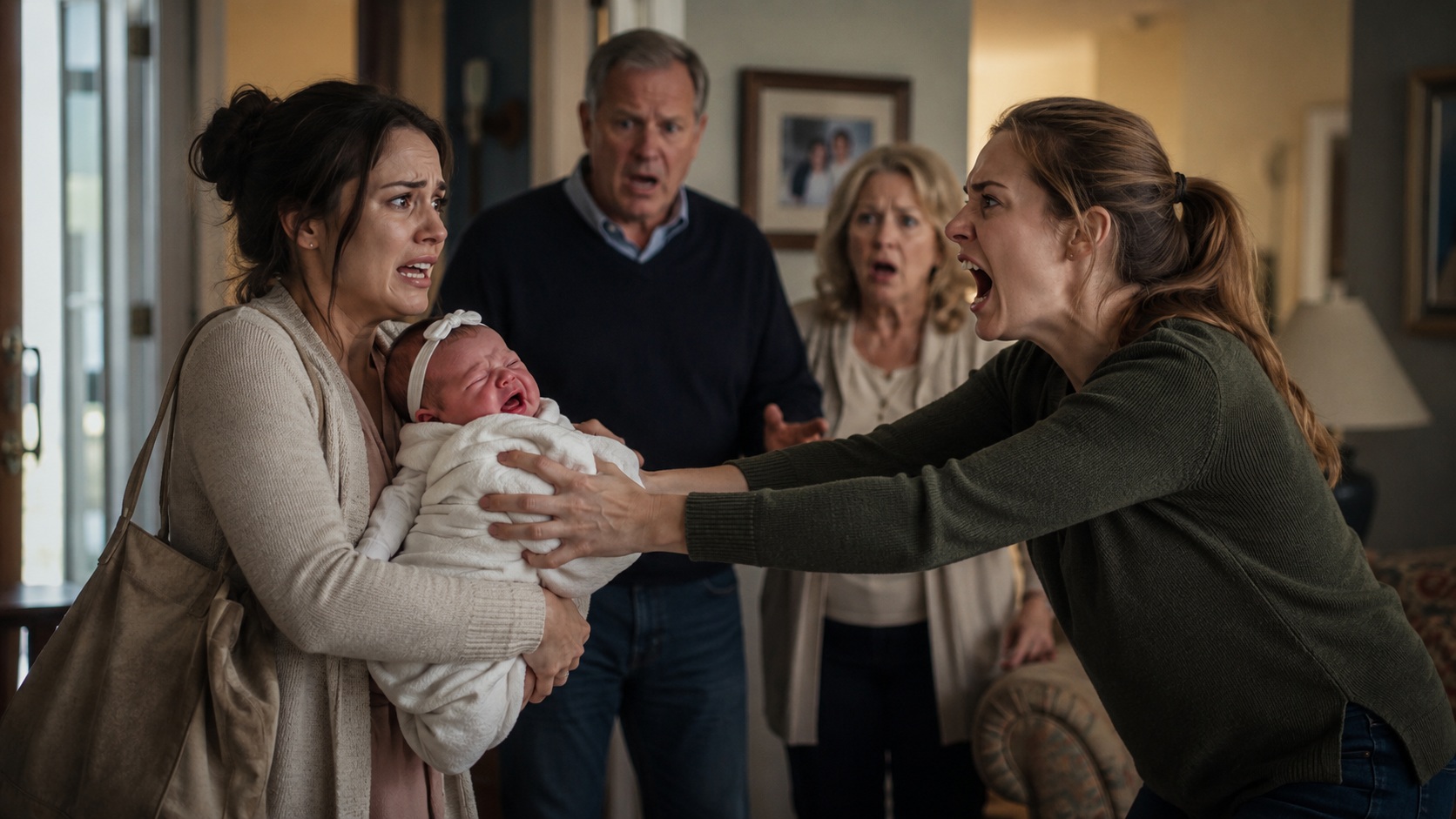
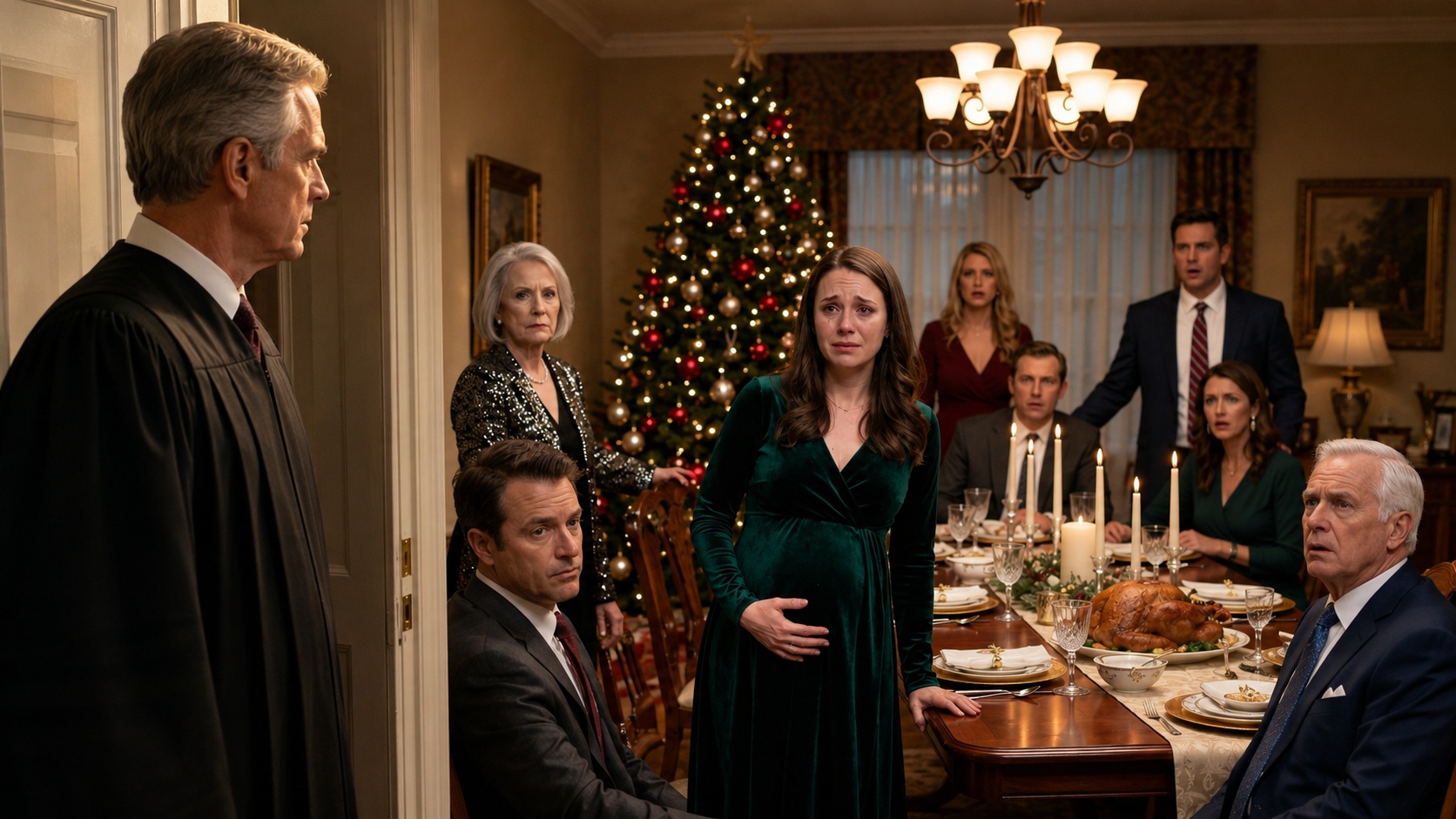
My name is Emily, and for two years the other wives on base treated me like I didn’t belong in their world.
My husband, Specialist Tom Reyes, was proud of his uniform but we never had much money. We drove a used car with a dent in the bumper. I clipped coupons at the commissary while other wives filled their carts without even glancing at price tags. I wore the same three outfits to every spouse coffee morning, and I could feel their eyes doing the math every single time.
The worst of them was Victoria, wife of a battalion commander. She ran the wives club like her own private kingdom. She’d smile at me in front of everyone, then say things just quiet enough to sound accidental.
“Oh Emily, that blouse is… comfortable. Practical, I suppose, for someone in your situation.”
Someone in your situation. I heard that phrase more times than I could count. I sat through baby showers where gifts were compared like trophies, holiday parties where seating charts quietly excluded me, and group chats where I was added late and left out of plans constantly. I never said anything. I told myself Tom’s career mattered more than my pride, and I swallowed every insult with a smile.
What none of them knew, what I never once mentioned, was the company my late father built from nothing forty years ago. A logistics and manufacturing company that had grown quietly into something enormous, something whose name appeared on government contracts, shipping labels, and military equipment orders across the entire country.
I never used my maiden name socially. I never wanted anyone to treat me differently because of money I didn’t earn myself. I just wanted to be Tom’s wife, nothing more, nothing less.
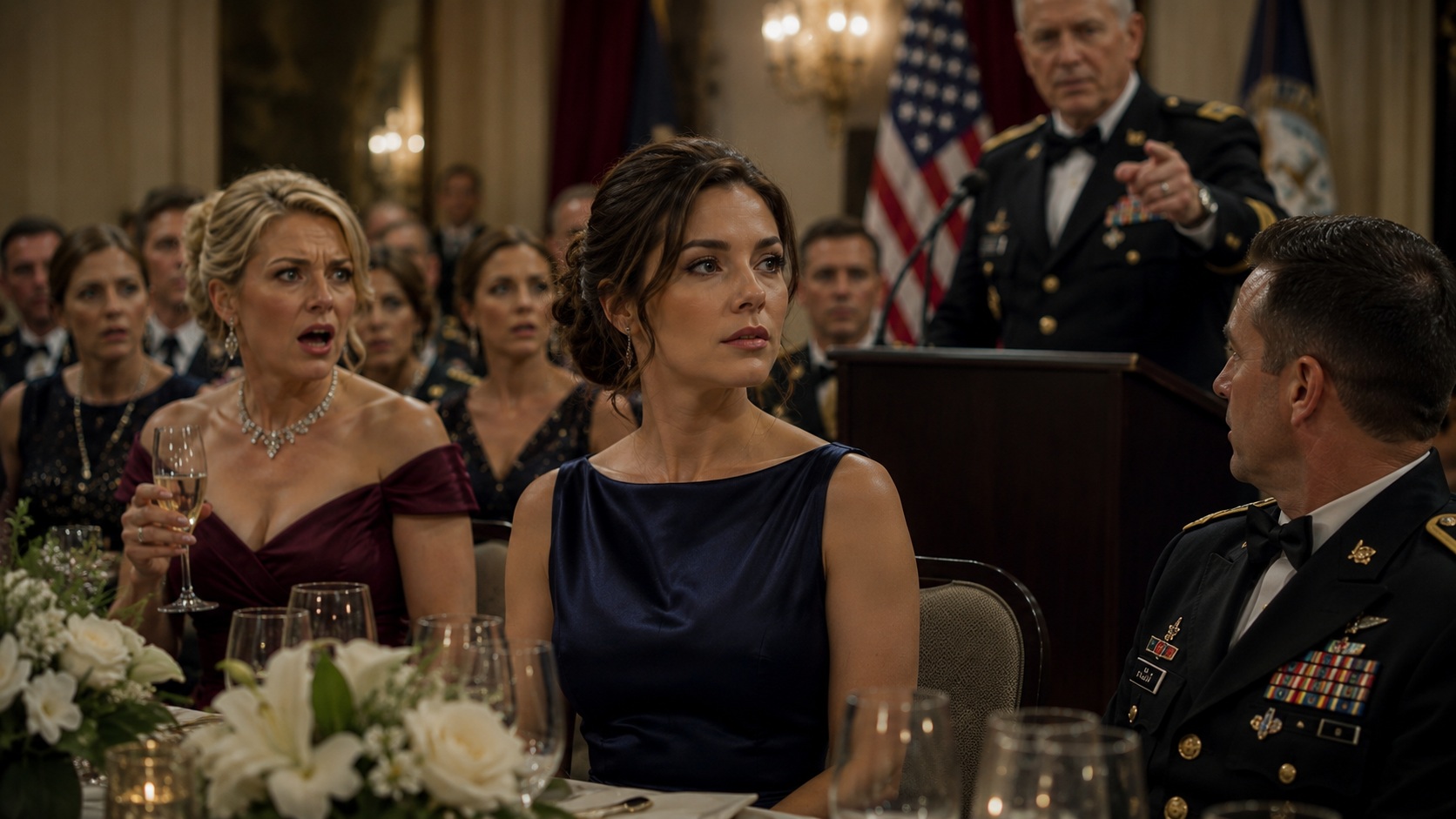
Then last Tuesday, the battalion held a formal dinner to announce a major new equipment contract for the base, a partnership that would bring millions in upgraded supplies and resources to Tom’s unit. Every officer’s wife was there in her finest dress, Victoria seated proudly at the head table beside her husband.
The commanding officer stood to make the announcement, thanking the partnering company by name for their generous investment in the base’s future.
I froze in my seat the moment I heard that name spoken out loud into the microphone, because it was the exact name printed at the top of every legal document I had quietly signed as majority shareholder just three months earlier.
Part 2: The Silence After the Announcement
For a moment I couldn’t move. I couldn’t even breathe properly. The commanding officer kept talking, thanking the company for its “generous investment in the future readiness of this base,” and every word landed like a stone dropping into still water, rippling straight through me.
I looked around the room. No one else seemed to notice anything. To them it was just a name on a projector screen, a logo stitched onto a banner near the stage. To me it was the company my father built with his bare hands, the one I now controlled more of than anyone alive.
Victoria was practically glowing at the head table, whispering something to the wife beside her, no doubt already rehearsing how she’d describe this night later. “Such a prestigious partnership,” she’d say. “Of course, my husband’s unit was the natural choice.”
I kept my face still. I reached for my water glass just to have something to do with my hands.
Then I felt it, a gaze from across the room that didn’t belong to any of the officers or their wives. A man in a dark suit near the back, someone I recognized instantly even though I hadn’t seen him in person in over a year. Richard Hale, our company’s CEO, the man my father had personally mentored before he passed, the man who now ran daily operations while I stayed quietly in the background as majority shareholder. He wasn’t supposed to recognize anyone at this dinner. He definitely wasn’t supposed to recognize me.
But he did. I saw it happen. His eyes caught mine, widened just slightly, and for one terrifying second I thought he might actually stand up and say something. Instead he gave the smallest nod, a silent promise that he understood exactly what this meant, and looked away like nothing had happened.
I exhaled.
Tom leaned toward me, his hand finding mine under the table the way it always did when he sensed I’d gone somewhere far away in my head. “You okay?” he whispered. “You look pale.”
“I’m fine,” I said, forcing my voice steady. “Just tired.”
He studied me a second longer than usual, the way he always did when he knew I was hiding something, but he let it go. He always let it go. That was one of the reasons I loved him. He never pushed, never demanded explanations, never made me feel small for needing my privacy. It was everyone else who did that.
Across the room, Victoria’s laughter rang out, sharp and performative, aimed just loud enough for nearby tables to hear. “I do hope this contract brings in people who actually understand what it takes to build something,” she said to no one in particular, though her eyes flicked toward me for half a second before sliding away. “Not everyone here grew up with real ambition.”
A few wives near her laughed politely. I said nothing. I simply smiled the same practiced smile I’d worn for two years, the one that cost me nothing and revealed even less.
The dinner ended shortly after, the room dissolving into polite chatter and clinking glasses as officers shook hands with representatives from the company, completely unaware they were shaking hands with employees of a business that answered, ultimately, to me.
I didn’t sleep that night. I lay awake beside Tom, listening to him breathe evenly beside me, and stared at the ceiling replaying the moment the name was announced, the moment Richard saw me, the moment I understood there was no version of my life left where I could stay invisible much longer.
At six the next morning, before Tom even woke for his shift, my phone buzzed on the nightstand. It was Richard.
“Emily,” he said the second I picked up, his voice hushed, urgent. “I didn’t know. I swear I had no idea this was your husband’s post until I walked in and saw you sitting there.”
“I know,” I whispered, slipping quietly out of bed and into the hallway so I wouldn’t wake Tom. “It’s not your fault.”
“Legal needs you,” he said. “The contract’s moving into its formal execution phase next week. As majority shareholder, your signature is required on the final documents, and given the size of this deal, there’s a strong chance they’ll want a company representative to attend the next base briefing. In person.”
I closed my eyes, leaning against the wall in the dark hallway of the house I shared with a Specialist who thought his biggest secret was the surprise anniversary trip he was saving up for.
“They’ll want photos,” Richard added carefully. “Statements. Possibly press. This isn’t something you can sign from a distance anymore, Emily. Not for a deal this size.”
Somewhere behind me, I heard the bedroom door creak open. Tom’s voice, groggy and warm, called out. “Em? Everything okay?”
I looked at the phone in my hand, then toward the sound of his voice, and understood with sudden, heavy clarity that the life I had built out of quiet coupons and secondhand cars and swallowed insults was about to collide, completely and unstoppably, with the one I’d spent years trying to keep buried.
“I’ll call you back,” I told Richard, and hung up.
“Just work,” I said to Tom, forcing a smile as I walked back into the bedroom. “Nothing important.”
It was the last lie I would ever tell him.
Part 3: The Wives Club Coup
Word of the new contract spread through the base like wildfire, and within days, everything about the wives club atmosphere shifted into overdrive. Victoria seized the opportunity immediately, announcing she would personally organize a charity gala to “celebrate this historic partnership,” an event she made clear, in front of the entire group chat, would be invitation only.
“We want to keep it elegant,” she wrote, followed by three separate messages detailing dress codes, a specific caterer, and a suggested donation amount that made my stomach turn. Then came the final message, sent to the group but clearly meant for me.
“Given the formal nature of the evening, we’ll be keeping the guest list a bit more curated this time. I’m sure everyone understands.”
No one needed to ask who wasn’t invited.
I stared at that message longer than I should have. Two years of these exact moments, small cuts delivered with a smile, had taught me exactly how to respond. I typed “Of course, sounds lovely” and put my phone face down on the counter.
That evening, Tom came home looking troubled in a way I hadn’t seen before. He sat at the kitchen table without taking off his boots, which for him was always a sign something had rattled him.
“Guys were talking today,” he said slowly. “Some rumor going around that my file’s being flagged for review. Possible early separation.”
My chest tightened immediately. “What? Why would that even be on the table? You’ve had an exemplary record.”
“I don’t know,” he said, running a hand through his hair. “Nobody’s told me anything official. It’s just talk. But you know how fast talk turns into something real around here.”
I later learned, through a quiet conversation with another spouse who still spoke to me despite Victoria’s unofficial blacklist, that the rumor had started at one of Victoria’s coffee mornings. Nothing confirmed, nothing official, just a comment dropped carelessly, or perhaps not carelessly at all, about “certain families who might not fit the image the battalion wants moving forward.”
I understood exactly what that meant. Victoria had decided that if she couldn’t outshine me socially, she would find another way to remind me exactly how small she believed I was, even if it meant using my husband’s career as the weapon.
That night, once Tom was asleep, I sat alone at the kitchen table with my father’s old company binder open in front of me, the one I hadn’t touched in over a year. Inside were photos from decades ago, my father in a small warehouse with three employees and a single delivery truck, his handwriting scrawled across early contracts, notes he’d left behind about integrity mattering more than image.
I remembered why I’d hidden all of this in the first place. Growing up, the moment people learned about the money, they stopped seeing me and started seeing dollar signs. Friends became strategic. Relationships became transactional. I had watched it happen to my father too, watched people smile at him while calculating exactly how much they could extract from the relationship.
I had wanted, more than anything, to be loved for something real. I thought marrying Tom, moving onto base, living simply, would finally give me that. And in many ways it had. Tom loved me before he ever knew there was anything to gain. That part of my life had never been a lie.
But the world I’d married into had its own version of the same disease, just wearing a different uniform. Status here wasn’t measured in stock portfolios, it was measured in rank, in reputation, in how loudly your husband’s name was spoken during promotion boards. Victoria understood that currency perfectly, and she had just tried to spend it against my family.
I closed the binder and made a decision I’d been avoiding for weeks.
The next morning, I called Richard back.
“I need you to prepare everything,” I said. “The paperwork, the public appearance, all of it. I’ll attend the base briefing in person, and I want full transparency with the officers about who I am.”
There was a pause on the line. “Emily, once you do this, there’s no undoing it. Everyone will know.”
“I know,” I said, watching Tom through the kitchen window as he loaded his gear into the car for his shift, completely unaware that his career, his reputation, and quite possibly Victoria’s entire carefully built kingdom, were all about to shift beneath their feet. “Let them know.”
Part 4: The Reveal
The base briefing was scheduled for the following Friday, held in the same hall where the contract had first been announced, except this time the room was arranged differently, chairs set in formal rows facing a small stage with a podium and a projector screen bearing the company logo I had spent years trying to keep separate from my everyday life.
I wore a plain navy dress, nothing flashy, because I wasn’t there to prove anything about wealth. I was there to prove something about truth.
Tom drove me that morning, still under the impression this was simply a “company thing” tied to his unit’s new contract, something he assumed I was attending as a curious spouse or perhaps helping Richard, whom he vaguely knew as “a family friend from my dad’s old business.” He had no idea how deep that description actually ran.
“You’ve been quiet all week,” he said as we pulled into the parking lot. “You sure you’re okay?”
I reached over and squeezed his hand. “I need you to trust me today. No matter what happens in there.”
He frowned slightly but nodded, the same steady trust he’d given me since the day we met.
Inside, the room filled with officers, their spouses, and personnel from the contracting company. Victoria sat near the front beside her husband, dressed impeccably, clearly expecting to bask in the reflected importance of the moment. She glanced back once, saw me sitting quietly near the middle rows, and gave me a small, tight smile, the kind reserved for people she’d already mentally filed away as unimportant.
The commanding officer opened the briefing with formal remarks about the scope of the contract, the equipment upgrades, and the economic impact on the base. Then he introduced Richard Hale to speak on behalf of the company.
Richard walked to the podium, adjusted the microphone, and looked out at the room with the calm authority of someone who had run boardrooms for twenty years.
“Before we go over the operational details,” he said, “I want to formally introduce someone the majority of you have never met, despite the fact that she holds more influence over this partnership than anyone else in this room.”
My pulse pounded in my ears.
“Our company was founded over forty years ago by a man who believed that businesses should serve the people who build them, not just profit from them,” Richard continued. “After his passing, majority ownership transferred to his daughter, who has remained the controlling shareholder of this company ever since, though she has chosen, for her own personal reasons, to stay out of the public eye.”
He paused, then looked directly toward my row.
“That shareholder is here today. Emily Reyes.”
The room went utterly silent.
I stood slowly, feeling every set of eyes swing toward me at once. Tom turned in his seat, his expression shifting rapidly from confusion to disbelief to something that looked almost like the floor had opened beneath him.
“Em,” he said quietly, just loud enough for me to hear. “What… what is he talking about?”
I walked to the front, my legs somehow steady despite the roar in my ears, and took the small handheld microphone Richard offered me.
“My name is Emily Reyes,” I said, my voice carrying clearly across the hall. “My husband is Specialist Tom Reyes, and for the past two years I have been proud to be his wife on this base. What most of you didn’t know is that my father built the company now partnering with this battalion, and after he passed away, I became its majority shareholder.”
I let that sink in before continuing.
“I never mentioned it because I wanted to be judged for who I am, not for what I inherited. I wanted my husband’s achievements to be seen clearly, without anyone assuming they were somehow connected to money that was never his or mine to claim credit for. I still believe that was the right choice for us.”
My eyes drifted, almost involuntarily, toward Victoria.
Her face had drained of color entirely. Her mouth opened slightly, then closed, as though her mind was scrambling backward through every interaction, every comment, every calculated cruelty, trying to recalculate all of it in real time. The blouse comment. The seating charts. The group chat exclusions. The gala. The rumor about Tom’s file. All of it replaying against a truth she never saw coming.
“I share this now,” I continued, “only because the size of this contract requires transparency, and because I believe the people on this base, the ones actually serving, deserve honesty from the partners investing in their future.”
I stepped back from the podium as applause slowly rippled through the room, hesitant at first, then stronger, though I barely heard it. My focus was entirely on Tom, who was staring at me like he was seeing me for the very first time.
After the briefing ended and officers swarmed Richard with questions, Tom pulled me gently into the hallway outside, away from the crowd.
“Two years,” he said, shaking his head slowly, though there was no anger in his voice, only stunned disbelief. “Two years and you never said anything.”
“I didn’t want it to change how you saw me,” I said quietly. “Or how you saw us.”
He was quiet for a long moment, searching my face. Then, slowly, something like pride broke through the shock. “You sat through every single thing they said to you,” he murmured. “Every insult. Every snub. And you could have ended it with one sentence, any time you wanted.”
“I know,” I said. “But it was never about proving anything to them. It was about being your wife first.”
He pulled me into a hug right there in the hallway, and for the first time in two years, I let myself cry, not out of sadness, but out of the strange, overwhelming relief of finally not having to carry the secret alone.
Behind us, through the open doorway, I caught one last glimpse of Victoria standing frozen near the front of the room, staring at the space where I’d been standing moments before, as though trying to understand exactly how the woman she’d spent two years looking down on had just quietly rearranged the entire hierarchy of her world.
Part 5: The New Kingdom
News travels fast on a military base, faster than any official announcement ever could. By the following morning, everyone from the commissary cashiers to the battalion’s senior officers knew exactly who I was. My phone, which used to sit silent for days at a time, buzzed constantly with messages from wives I hadn’t heard from in months, all suddenly eager to reconnect.
I didn’t respond to most of them.
Victoria, however, showed up at my door two days later, something she had never done in two years of living four streets away. She stood on my porch in a cardigan I didn’t recognize, understated in a way that felt deliberate, clearly meant to signal humility.
“Emily,” she said, her voice softer than I’d ever heard it. “I owe you an apology. I had no idea about your circumstances. If I had known, I never would have—”
“That’s exactly the problem,” I interrupted gently. “You’re only sorry now because you know what I have. Not because of how you treated someone you believed had nothing.”
She opened her mouth to respond, then closed it, unable to argue against the truth of that.
“I don’t need an apology rooted in what I’m worth on paper,” I continued. “If you ever want to actually make things right, it won’t be with words on my doorstep.”
She left without saying much else, and within the following weeks, word around base shifted again, this time about her. Officers’ wives who once orbited her leadership of the wives club began quietly distancing themselves, not out of loyalty to me, but because the same social currency Victoria had always traded in, image, status, whispered opinions, had suddenly turned against her. Her husband, a battalion commander who valued discretion and reputation above almost everything, was reportedly displeased at how visibly his wife’s behavior had become a topic of conversation tied to a major contract now under scrutiny by his own command.
I took no pleasure in that unraveling, though I won’t pretend I felt sorry for her either.
As for Tom, our relationship didn’t just survive the reveal, it deepened in ways I hadn’t expected. He never once asked for access to the company, never treated me differently, never let a cent of it change how he moved through the world. If anything, he became fiercely protective of the boundary I’d built for so long, gently redirecting conversations whenever someone tried to bring up “the company” instead of simply asking about him.
“I married Emily,” he told a curious officer at a barbecue a few weeks later, “not a bank account.”
I used my new visibility, once I accepted there was no putting that particular truth back into hiding, for something more useful than simply defending myself. I worked with Richard to establish a scholarship and support fund specifically for military spouses, covering things like career certification programs, emergency housing assistance, and small business grants for spouses trying to build something of their own despite constant relocations. I made sure it wasn’t attached to my name, no plaques, no press releases with my photo, just quiet, steady support for people who understood exactly what it meant to feel invisible while holding a family together.
Sometimes I still saw Victoria at base events, always polite now, always careful. The wives club continued, under new, quieter leadership, without the sharp edges that used to define it.
I never became the woman who filled the head table with expensive dresses and calculated seating charts. I stayed exactly who I’d always been, the woman with the dented bumper car, the coupon clipper, Specialist Reyes’s wife.
Except now, everyone finally understood that being underestimated had never meant being powerless. It had simply meant I was choosing, every single day for two years, exactly who I let define my worth.
And in the end, it was never about proving anything to Victoria, or to the wives club, or to anyone at that dinner table.
It was about finally being free to be all of who I was, without losing any part of who I’d always chosen to be.