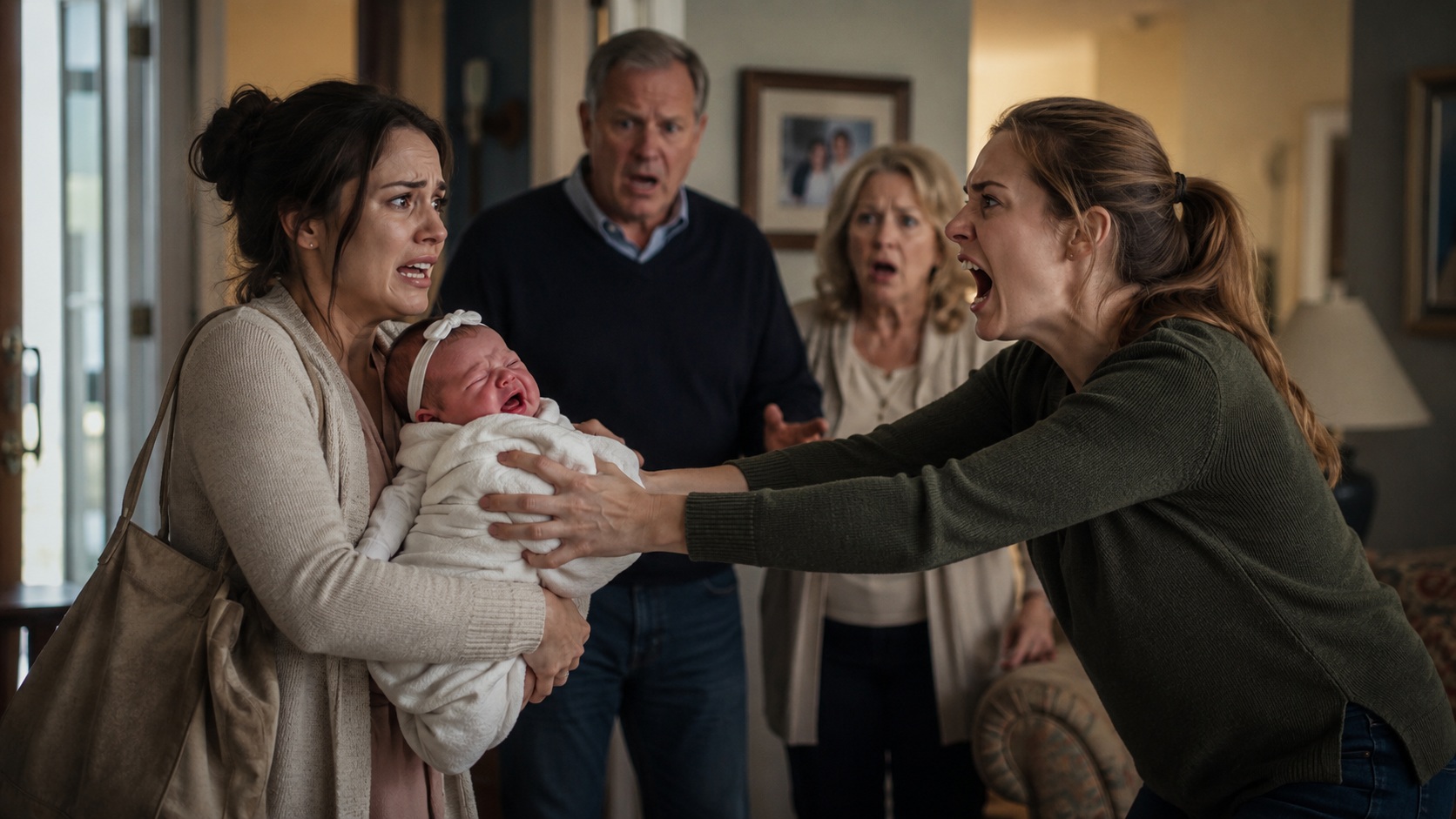
He threw the makeup bag onto the bed like nothing had happened.
“Use the green concealer. It hides purple.”
Not because he cared.
Because he didn’t want his mother to see what her son had done.
The funny part?
She already knew.
In fact, she was the one pushing us to sell MY house, move under her roof, pay HER mortgage with MY salary, clean HER home, and stay silent while her “perfect son” controlled everything.
When I said no…
He slapped me.
Then shoved me into the dresser.
Then kicked me while I was on the floor.
The next morning, he left for work believing I was finally broken.
He was wrong.
The second that front door closed, I pulled out a phone he’d never found.
For months I’d secretly documented everything.
📸 Every bruise. 🎙️ Every threat. 💳 Every forged bank document. 📂 Every conversation between him and his mother, plotting to steal my home and paint me as “mentally unstable” if I ever fought back.
I wasn’t just any wife.
I was a forensic accountant.
And I knew exactly how to preserve evidence.
Then I made one phone call…
A number I hadn’t dialed in five years.
“Dad…”
My voice barely came out.
“I need you.”
There was a long silence.
Then the only man my husband feared more than any judge spoke just seven words:
“Tell me where you are.”
At exactly noon…
My husband walked back into the house, laughing with his mother, expecting lunch to be waiting.
Instead…
The makeup was untouched.
My suitcase was gone.
And sitting calmly in MY living room…
…was the last person either of them ever expected to see.
PART 2: THE MAN IN THE CHAIR
My husband stopped in the doorway.
His smile didn’t fade right away. It just froze there, stupid and stiff, like his face hadn’t caught up with his eyes yet.
Because sitting in MY armchair, one leg crossed over the other, was my father.
Calm. Silent. Reading a newspaper he clearly wasn’t reading.
“Dad?” My husband’s voice cracked on the word. He turned to his mother like she might explain it away. She didn’t. She couldn’t. Her face had gone the color of old paper.
My father didn’t look up right away.
He took his time folding the newspaper. Set it down on the coffee table. Then finally lifted his eyes.
“Sit down, son.” His voice was quiet. That was the part that scared people. My father never raised his voice. He never needed to.
My husband laughed, too loud, too fast. “This is… this is a misunderstanding. She probably exaggerated…”
“I’ve seen the photos.” My father cut him off without raising his tone. “All of them.”
Silence.
My mother-in-law found her voice first. “This is a family matter. You have no right…”
“She’s my daughter.” My father finally stood. He wasn’t a tall man. He never needed to be. “That makes it my business.”
I stood behind him, arms crossed, watching my husband’s face cycle through every mask he owned: charm, anger, wounded innocence. None of them landing.
“Where is she going?” he demanded, panic creeping into his voice now. “She can’t just leave. This is her house…”
“Was,” my father said. “You made sure of that. I’ve seen the documents too.”
My husband’s eyes flicked to me, really looked at me, for the first time since he’d thrown that makeup bag on the bed that morning.
“You told him everything?”
“I told him nothing,” I said. “The evidence told him everything.”
My father picked his coat up off the back of the chair, unhurried, like a man who had all the time in the world. He always moved like that when he was about to end something.
“There’s a car outside,” he said to me. “Your suitcase is already in it.”
My mother-in-law stepped forward, her voice sharp now. “You can’t just…”
“I can,” my father said, “and I am.”
He turned to my husband last. Looked him over slowly, the way you’d look at something you were deciding whether to bother stepping on.
“You should sit down,” he said again. “Because in about ten minutes, two people are going to knock on that door. One of them is going to ask you about the bruises. The other is going to ask you about the mortgage fraud.”
My husband’s face went white.
“What… what are you talking about…”
But my father was already walking toward the door, his hand resting lightly on my shoulder as we passed them both.
At the threshold, I stopped. Turned back, just once.
“The green concealer’s still in the bag,” I said. “You’re going to need it more than I ever did.”
And I walked out, my father beside me, leaving them standing in the wreckage of a house that was never really theirs to take.
PART 3: WHO MY FATHER REALLY IS
The car pulled away from the curb, and for the first time in months, I let my hands stop shaking.
My father didn’t say anything for the first few minutes. He never rushed into explanations. He let silence do the work first, the way he always had.
“You didn’t call me in five years,” he finally said. Not an accusation. Just a fact, laid on the table between us.
“I was ashamed,” I said. “You told me not to marry him.”
“I did.”
“You were right.”
He nodded once, like that settled it, and reached into his jacket. Pulled out a slim folder I hadn’t seen before.
“I’ve had someone watching the mortgage filings on that house for three months,” he said.
I turned to look at him fully. “What?”
“Your assistant called me two months ago. Said you’d started asking strange questions about wire transfers to an account she didn’t recognize. She was worried. She had my number from your wedding, of all things.” He almost smiled. “So I made a call.”
I felt something crack open in my chest, something between anger and relief. “You’ve known for two months?”
“I’ve suspected for two months,” he corrected. “I didn’t act, because I know how these men work. If I’d come in loud, he would have destroyed evidence and painted you as the unstable one before you had a chance to build your case properly. I needed you to gather what you had. Quietly. The way you’re trained to do.”
That was the moment it hit me: my father hadn’t just shown up because I called him.
He’d been waiting for me to call him.
“You could have told me,” I said, quieter now.
“You needed to believe you were doing it alone,” he said. “So that when it was over, you’d know it was you who got yourself out. Not me.”
I didn’t know whether to be angry or grateful. Maybe both.
“Who is Marcus Webb?” I asked. It was a name I’d found buried in one of the forged documents, a co-signer neither my husband nor his mother had ever mentioned.
My father’s jaw tightened. “Someone I know. He runs a small private lending operation. Cash for people who can’t get approved anywhere else, at rates that would make a loan shark blush.” He looked out the window. “Your mother-in-law borrowed against a property she doesn’t legally own. Yours.”
I sat back, stunned. “She used my house as collateral.”
“For a loan to pay off a different debt. One your husband made without telling either of you.”
The pieces started sliding into place in my head, fast now, the way they always had when I worked a real case. The pressure to sell the house. The rushed paperwork I was told to sign “for taxes.” The strange calls that stopped whenever I walked into the room.
“How do you know all this?” I asked.
My father turned to face me, and for a moment I saw something in his eyes I hadn’t seen since I was a little girl watching him walk into a courtroom like it belonged to him.
“Because before I was your father,” he said, “I spent eleven years as a federal fraud investigator. And I have never, not once, let someone hurt my family and walk away clean.”
The car slowed outside a building I didn’t recognize, tall glass doors, a discreet sign that read nothing but a suite number.
“Where are we?” I asked.
“Somewhere safe,” he said, opening the door. “And somewhere we can finish building the case that’s going to end them both.”
PART 4: THE FOLDER
The office looked nothing like a law firm or a police station. Just a quiet suite on the ninth floor, three desks, a wall of filing cabinets, and a woman named Priya who greeted my father like she’d been expecting us for hours.
“This is my daughter,” he said. “The one I told you about.”
Priya looked at me for a long moment, not with pity, but with something closer to recognition. “The forensic accountant,” she said. “Good. You’re going to need to be, for what’s in that file.”
She set a folder on the table between us. It was thick, thicker than I expected.
“Start reading,” my father said. “Tell me what you see.”
I opened it.
The first pages were mortgage documents, my signature on them, except I had never signed them. The forgery was decent, close enough to pass a glance, but I’d built a career catching exactly this kind of decent forgery. The pressure points were wrong. The pen lifted in places mine never would.
“This isn’t my signature,” I said.
“We know,” Priya said. “We had it confirmed three weeks ago.”
I flipped further. Wire transfers, dozens of them, moving in a pattern I recognized instantly: money borrowed against my house, funneled through an account in my mother-in-law’s name, then split between two destinations. One was a business account under my husband’s name I’d never heard of. The other was a name I didn’t recognize at all.
“Who is this?” I asked, pointing.
“Marcus Webb’s holding company,” my father said. “The loan shark I mentioned in the car.”
“So they borrowed against my house to pay off a private loan my husband took out.” I said it slowly, testing the shape of it. “Why would he need a loan like that in the first place?”
Priya slid another page across the table. Gambling debts. Not small ones. Two casinos, one sports book, and a pattern of losses stretching back almost two years, nearly the entire length of our marriage.
The floor of my understanding tilted.
“He was in debt before we even got married,” I said quietly.
“We believe so,” my father said. “We believe your mother-in-law knew, and instead of telling you, she found a way to make the debt your problem instead of his.”
I sat back in the chair, and for the first time since the night of the assault, I felt something other than fear or fury. I felt clarity. The kind that comes when a case finally opens up in front of you and you can see the whole shape of it laid out.
“This isn’t just abuse,” I said. “This is fraud. Coordinated. Premeditated.”
“Yes,” my father said.
“And if I take this to the police right now?”
“They’ll open a file,” Priya said. “But files take time, and men like your husband are good at disappearing money before anyone can freeze it. We need to move faster than the system does.”
I looked at my father. “What are you suggesting?”
He reached into his jacket one more time and set a small recorder on the table. My recorder. The one I’d used to document everything.
“I’m suggesting we let them think they’re still in control,” he said. “Just a little longer. Long enough for you to walk back in one more time, and get the one piece of evidence that isn’t in this folder yet.”
“Which is?”
“Him,” my father said, “admitting it. In his own words. To you.”
I looked down at the folder, at the forged signature that wasn’t mine, at the wire transfers with my house behind every one of them, and felt the last of my hesitation burn away.
“Tell me what I need to do,” I said.
PART 5: BAIT
I almost didn’t recognize my own voice when I called him.
“I overreacted,” I said, letting it shake just enough. “I’m scared. Can we talk?”
There was a pause on the other end, long enough that I could hear him deciding which version of himself to bring to the door.
“Of course,” he said finally. “Come home. We’ll fix this.”
Home. Like the word still belonged to him.
Priya clipped the recorder inside the collar of my jacket, small enough to disappear against the fabric. “Keep him talking,” she said. “Don’t ask leading questions, just let him fill the silence. Guilty men always do.”
My father didn’t like the plan. I could see it in the set of his jaw when he dropped me two blocks from the house.
“I’ll be outside,” he said. “The second something feels wrong, you say the word we agreed on, and I’m through that door in under a minute.”
“I know.”
“You don’t have to do this.”
“Yes,” I said, “I do.”
He didn’t argue after that. He just nodded once, the way he had in the car, and let me go.
My husband opened the door before I even knocked, his face arranged into something soft and sorry, the mask he used to wear in the first year of our marriage, back when I still believed it.
“I’m glad you came back,” he said.
“I didn’t come back,” I said, stepping past him into the living room. “I came to talk.”
His mother wasn’t there. That surprised me, until I understood why a moment later.
“I told her to give us space,” he said. “This is between us.”
He sat across from me, hands folded, doing his best impression of a man who’d been humbled. “I know I messed up. I know I hurt you. But you have to understand the pressure I’ve been under.”
“What pressure?”
And there it was. The door I needed him to walk through on his own.
“My mother,” he said, the words tumbling now, faster than he probably meant them to. “She’s been on me for months about the house. About the loan. I didn’t want to involve you in any of it, I swear, but Marcus doesn’t wait, and if we didn’t move the money through your name the interest was going to bury us both.”
“Move the money through my name,” I repeated softly. “You mean forge my signature.”
He flinched, but didn’t stop. Guilty men rarely do, once they start. “I panicked. The gambling, I know how it sounds, but I was going to pay it back before you ever noticed. I never meant for it to get this far.”
“And the night you hit me?”
His jaw tightened. For a second I thought he’d shut down, but instead something colder came out. “You wouldn’t just sign the papers. You wouldn’t just move into the house like a normal wife would. You made it harder than it needed to be.”
There it was. Not an apology. A justification.
“So you hit me,” I said, “because I wouldn’t help you hide a fraud you built to cover your gambling debts.”
He must have heard it then, how it sounded out loud, because his face changed, some instinct kicking in too late.
“That’s not what I said.”
“It’s exactly what you said.”
He stood up fast, and for one terrible second I thought he might come at me again, the way he had that night, the dresser, the floor, the sound of his own breathing over mine.
Instead the front door opened.
My father stepped through it, calm as ever, like he’d simply been waiting on the porch for the right line to make his entrance on.
“That’s more than enough,” he said. “We heard everything.”
My husband’s face went the color of ash.
“You recorded me.”
“She recorded you,” my father corrected, nodding toward me. “I only listened.”
And for the first time since that morning with the makeup bag, I watched my husband understand, really understand, that the version of the story where he controlled the ending was already over.
PART 6: THE MOTHER IN LAW STRIKES BACK
She came through the door like she already owned the outcome.
“What is going on here.” Not a question. A command dressed up as one.
My husband turned to her, and for a second I watched him search her face for a way out, the way he always had since we’d gotten married. She had always been his answer to everything.
“They tricked me,” he said quickly. “She recorded me. That’s illegal.”
“It isn’t,” my father said, unbothered. “One party consent. She’s allowed to record her own conversations. Your son should have learned that before he confessed to fraud in his own living room.”
My mother in law’s eyes moved from my father to me, sharp and calculating, recalculating in real time.
“This is a family dispute,” she said. “You have no business being here.”
“I had that business the moment your son forged my daughter’s signature,” my father said. “And I’ll have considerably more business once the fraud division finishes reviewing the loan documents with your name on them.”
Something in her face slipped, just for a second, before she caught it and rebuilt the mask.
“I don’t know what you think you have,” she said, “but nothing in that folder proves I knew about any forgery.”
“You cosigned the loan,” I said quietly. It was the first thing I’d said since she walked in. “I saw your signature on the transfer authorizing the funds to Marcus Webb’s account. You knew exactly where that money was going.”
Her mouth opened, then closed. She hadn’t expected me to know that name yet.
“You don’t understand what it’s like,” she said instead, pivoting the way people do when the ground gives out under the argument they meant to make. “I raised that boy alone. I did everything for him. I am not going to apologize for protecting my son.”
“You didn’t protect him,” I said. “You used him to bleed me dry, and when that wasn’t enough, you let him hit me to keep me quiet about it.”
“I never told him to hurt you.”
“No,” my father said. “You just built the pressure that made it happen, and looked away when it did.”
She turned to my husband, maybe hoping he’d defend her, the way he’d spent our whole marriage defending her. Instead he was staring at the floor, the reality of the recorder, the folder, and the last twenty minutes finally catching up to him all at once.
“Mom,” he said quietly. “Did you know? About the money?”
The question seemed to genuinely surprise her, like it hadn’t occurred to her that he might turn on her too.
“I did what was necessary,” she said, and that was the closest thing to a confession she was ever going to give us.
My father let the silence sit there long enough for it to sink into all of us.
“There will be a knock at this door in the next few minutes,” he finally said, checking his watch like a man confirming a train schedule. “Detective Alvarez, fraud division. I made the call this morning, before we ever came here.”
My husband’s head snapped up. “This morning? You planned this before we even talked?”
“I plan everything,” my father said. “That’s what happens when you underestimate the wrong family.”
Outside, right on cue, a car door closed.
My mother in law’s face finally cracked all the way open, the calm control gone, replaced by something closer to panic.
“You can’t let them arrest me,” she said, turning to her son. “Do something.”
But he didn’t move. He just sat there, staring at the woman who had spent his entire adult life telling him what to do, watching her ask him for help for the very first time and having absolutely nothing to give her.
There was a knock at the door.
PART 7: DETECTIVE ALVAREZ
Detective Alvarez didn’t look the way I expected. No badge flashed dramatically, no raised voice. Just a tired looking woman in her fifties with a notepad and the patient expression of someone who had walked into hundreds of living rooms exactly like this one.
“Mrs. Whitfield.” She nodded at my mother in law first, then turned to my husband. “Mr. Whitfield. I’m going to need to ask you both some questions. You’re welcome to have a lawyer present for any of it.”
“A lawyer,” my mother in law repeated, like the word had personally offended her. “I haven’t done anything that requires a lawyer.”
“Then this should be quick,” Alvarez said, and there was nothing unkind in it, just the flat patience of someone who had heard that line a hundred times before, always followed by hours of it not being quick at all.
She turned to me. “Ma’am, I understand you have documentation.”
“I do.” I nodded toward the folder Priya had prepared, sitting on the coffee table where my husband’s confession had happened not twenty minutes earlier. “Bank transfers, forged signatures, and a recording from this afternoon.”
“Legally obtained,” my father said. “One party consent state. I’d be happy to have my daughter’s attorney forward you a copy today.”
Alvarez looked between the three of us, then at my husband, who still hadn’t said a word since the knock at the door.
“Mr. Whitfield, do you want to tell me about the loan from a Marcus Webb?”
My husband’s mouth opened. Whatever he’d planned to say seemed to evaporate the moment he had to say it out loud to someone whose job was to write it down.
“I…” He looked at his mother. She wasn’t looking back at him anymore. She was looking at the floor, at the door, anywhere but at her son. “I needed money. Gambling debts. My mother helped me figure out a way to cover it.”
“By taking a loan against a property neither of you owned,” Alvarez said, not a question.
“It was going to be temporary,” he said. “I was going to pay it back before anyone noticed.”
“Your wife noticed,” Alvarez said.
He didn’t answer that one.
Alvarez turned to my mother in law. “Ma’am, your signature is on the transfer authorization. Can you explain that?”
“I was helping my son,” she said, chin lifted, like dignity alone might carry her through it. “A mother is allowed to help her son.”
“A mother is allowed to help her son,” Alvarez agreed. “She’s not allowed to forge someone else’s signature on a mortgage document or use a property she doesn’t own as collateral for a private loan. That’s fraud, regardless of the family relationship.”
The word fraud seemed to land differently out loud, in a stranger’s mouth, than it had in the folder Priya had shown me that morning.
“I want a lawyer,” my mother in law finally said.
“That’s your right,” Alvarez said, already reaching for her radio. “Same offer stands for you, Mr. Whitfield.”
My husband looked at me then, really looked, for what I understood in that moment would be the last time he ever looked at me as his wife instead of a stranger who had once shared his address.
“You did this,” he said, quiet, almost wondering. Not accusing. Just trying to understand how the day had turned into this.
“No,” I said. “You did this. I just stopped hiding it.”
Alvarez glanced between us, then nodded toward the door, where two more officers had appeared, waiting.
“We’re going to need you both to come down to the station,” she said. “Separately.”
My mother in law’s composure finally broke entirely as the officer took her arm, her voice rising for the first time all afternoon. “This is insane, I am not a criminal, I am a mother—”
“You can explain that downtown,” Alvarez said gently, and led her out.
My husband didn’t fight it. He just stood, looked at the house one last time, the house that had never really been his, and let the second officer walk him to the car.
My father put a hand on my shoulder as the door closed behind them.
“How do you feel,” he asked.
I thought about it honestly before I answered.
“Lighter,” I said. “And not even close to done.”
PART 8: THE OTHER WOMAN
The call came two days later, while I was still staying in my father’s guest room, still waking up every morning half expecting to hear a car in the driveway that wasn’t going to come.
It was Detective Alvarez.
“There’s something you should probably hear from us before you hear it from anyone else,” she said.
I sat down at the kitchen table, my father across from me, both of us going still the way you do when you sense a conversation is about to rearrange something.
“When we pulled your husband’s phone records as part of the fraud case,” Alvarez said, “we found a number that came up almost every day for the last year. Texts, calls, sometimes late at night.”
My stomach dropped, even though some quiet, tired part of me had almost expected it.
“A woman,” I said. It wasn’t a question.
“Yes. A coworker of his. We’re not investigating that relationship, that’s not a crime, but it is relevant, because some of the money from the loan didn’t go to gambling debts or your mother in law’s mortgage. Some of it went to her.”
I closed my eyes. “How much.”
“Enough that we think it matters to your case,” Alvarez said carefully. “He was paying for an apartment. Under her name. For over a year.”
An apartment. While he was telling me we couldn’t afford to keep my house. While his mother stood in my kitchen lecturing me about sacrifice and loyalty and what a good wife was supposed to do.
“Does she know?” I asked. “About the fraud. About me.”
“She says she didn’t,” Alvarez said. “For what it’s worth, she seemed genuinely shaken when we told her where the money actually came from. She thought it was his.”
My father hadn’t said a word this whole time, but I could see something tightening in his jaw, the particular stillness he got right before he decided to act on something.
“Does this change the case?” he asked Alvarez.
“It strengthens it,” she said. “It shows a pattern of financial deception that goes well beyond one bad loan. It also gives us a clearer picture of motive. He wasn’t just covering gambling debts. He was funding an entire second life, and your house was paying for it.”
After I hung up, I sat there for a long time, staring at the grain of my father’s kitchen table, waiting to feel something enormous. Betrayal, maybe. Grief for a marriage I’d already understood was over.
Instead what I felt, quietly and a little frightening in its clarity, was relief.
Every ounce of guilt I’d been carrying, the small voice that had whispered maybe if I’d been a better wife, maybe if I hadn’t fought the move, maybe if I’d just signed the papers, went silent all at once.
None of it had ever been about me. It never had been.
My father finally spoke. “You’re not going to hear from me that I told you so.”
“You basically already did.”
“I know,” he said. “I’m allowed one.”
I almost laughed. It surprised me, how much I needed to.
“There’s something else,” I said slowly, the accountant in me already three steps ahead. “If he was funding an apartment for over a year, and the loan only started six months ago, where was that money coming from before the loan existed?”
My father looked at me, something like pride flickering under the concern.
“That’s a very good question,” he said. “Maybe it’s time we asked Priya to pull his employment records too.”
PART 9: THE FIRST ACCOUNT
Priya called us into the office the next morning, and I knew before I even sat down that whatever she’d found was bigger than a second apartment.
“I pulled his employment and banking history going back four years,” she said, sliding a printed spreadsheet across the table. “Before I explain, I want you to look at this account here.”
She pointed to a row highlighted in yellow. An account opened three years ago, a year before our wedding.
“That’s not one of the accounts from the fraud case,” I said.
“No,” Priya said. “This one’s older. And it’s been receiving deposits from his employer that don’t match his salary.”
My father leaned forward, scanning the numbers. “Bonuses?”
“That’s what we thought too, at first,” Priya said. “So I called a contact who does compliance work at his company. Turns out there were no bonuses that year. Not for him, not for anyone on his team.”
I felt the shape of it before she even said the rest.
“He was skimming,” I said quietly.
“We think so. Small amounts, moved through vendor invoices that don’t correspond to any actual vendor. It’s a pattern I’ve seen before, someone who understood exactly how much they could take without triggering an audit.”
“How long has this been going on?”
“Three years,” Priya said. “Which means it started before your marriage, and it never stopped.”
I sat back, the picture rearranging itself completely. This wasn’t a man who had spiraled into debt after we got married. This was a man who had built an entire secondary financial life for himself years before he ever proposed to me, one his gambling had simply grown to swallow.
“He didn’t fall into this,” I said slowly. “This is who he already was when he married me.”
My father’s jaw was tight. “Which means the house, the loan, the forged signature, none of that was a one-time act of desperation.”
“It was a pattern,” I finished. “I was just the newest source.”
Priya nodded slowly. “There’s one more thing you should see.”
She slid over a final page. A wire transfer, dated eight months before our wedding, moving a significant sum out of the skimmed account and into a separate one under his mother’s name.
“She’s been involved longer than we thought,” I said.
“She’s been involved from the beginning,” Priya corrected gently. “This wasn’t a mother helping her son out of a bad situation. This was a partnership. And you weren’t just a wife they controlled. You were the plan.”
The words sat heavy in the room.
I thought about every dinner where she’d smiled at me across the table while pushing us to sell my house. Every time she’d called me difficult for asking questions about the accounts. Every moment I’d blamed myself for not being patient enough, understanding enough, grateful enough.
None of it had been about my failures as a wife.
I had simply been chosen.
“I want everything,” I said, my voice steadier than I expected. “Every account, every transfer, every year. I want the fraud division to see all of it, not just the piece that involves my house.”
My father looked at me, and for the first time since this had all started, I saw something other than concern in his expression.
He looked proud.
“Then let’s build the rest of the case,” he said. “All the way back to the beginning.”
PART 10: THE BEGINNING
It was Priya who found the email first, buried in an old work account my husband had forgotten still existed, one he’d used briefly before switching companies.
“You should sit down for this one,” she said, and I already knew from her voice that it was going to be worse than anything we’d found so far.
The email was dated almost two years before I ever met him. Sent to an old college friend of his, someone named Tyler.
“Met a girl at my cousin’s wedding. She’s a forensic accountant, makes good money, no family drama except a dad with connections. Mom already likes her. Could be exactly what we need.”
I read it twice, then a third time, waiting for the words to rearrange themselves into something less ugly. They didn’t.
“He was looking for me,” I said quietly. “Before he ever actually met me. He was looking for someone like me.”
“It looks that way,” Priya said, and for once her clinical calm wavered slightly, like even she found this one hard to deliver.
My father hadn’t said anything. He was staring at the email like he was memorizing it, the way he used to look at evidence in the cases he’d worked decades ago, cataloging it somewhere it would never leave him.
“There’s more,” Priya said gently. “Tyler responded.”
She scrolled down.
“Didn’t your mom already burn through one wife’s savings doing this exact thing with your uncle? Careful man.”
The room went very quiet.
“Your uncle,” I repeated slowly, looking at my father. “Does he mean…”
“My brother,” my father said, his voice flat in a way I’d rarely heard it. “He married a woman fifteen years ago. She lost her house within three years. I always thought it was bad luck. Bad decisions on her part.”
“It wasn’t luck,” I said. “It was a method.”
Priya nodded slowly. “We’re going to want to find that woman. If this is a pattern that goes back through the family, further than just your husband, it changes everything about how prosecutors will look at this case. This wouldn’t be one man making one mistake. This would be a coordinated, repeated scheme, targeting specific women, for years.”
I sat with that for a long moment, feeling something shift permanently inside me. All this time I had quietly, secretly wondered what I had done to become a target. What weakness in me had let this happen.
The answer, it turned out, had nothing to do with me at all.
I had simply been useful. My salary. My house. My father’s reputation, which they’d assumed would stay quiet and uninvolved the way it apparently had with the last woman in the family who’d gone through this.
They had miscalculated exactly once.
They had never expected me to call him.
“Find her,” I said to Priya, my voice steadier than I felt. “The uncle’s ex-wife. If she’s willing to talk, I want to hear everything she knows.”
My father finally looked up from the email, and there was something new in his face now, something colder and more determined than concern.
“This isn’t just about getting you your house back anymore,” he said.
“No,” I agreed. “It isn’t.”
“This is about making sure there’s no one left in that family for them to do this to again.”
I nodded slowly, feeling the shape of the next several weeks settle into place ahead of me, no longer just a woman rebuilding her life, but an accountant building a case.
“Then let’s go find her,” I said.
PART 11: THE FIRST WIFE
Her name was Renata, and it took Priya four days to find her.
She’d moved three states away after the divorce, changed her last name back, and built a small, quiet life running a flower shop that had nothing to do with the family that had once tried to take everything from her. When my father called, she almost hung up twice before she agreed to talk.
We met her in person on a Saturday, in the back room of her shop, the air thick with the smell of lilies and cut stems.
She looked at my father first, studying his face like she was checking for the family resemblance to a man she clearly still feared. Then she looked at me.
“You’re the accountant,” she said. Not a question. “I read about the case online. I wondered if someone would eventually call me.”
“I’m sorry it took this long,” I said.
Renata let out a breath that seemed to carry fifteen years of exhaustion in it. “I used to think it was just me. That I’d been foolish, or blind, or too trusting. It took me a long time to understand it wasn’t about me at all.”
“It wasn’t,” I said quietly. “It was never about either of us.”
She nodded slowly, then began to talk, and as she did, I felt the last of my own guilt finally burn away completely.
The pattern was almost identical. She’d met my father’s brother at a wedding too. He’d been charming, attentive, endlessly complimentary about her steady job and her small inheritance from her grandmother. His mother, my husband’s grandmother, had loved her immediately, had pushed for them to move in together within the same year they married.
“She kept saying family should share everything,” Renata said. “That it was selfish to keep separate accounts, separate names on the house. I believed her. I wanted to believe her.”
Within two years, her savings were gone, moved into accounts she didn’t have access to. Within three, the house she’d inherited from her grandmother had been refinanced twice, without her full understanding of what she was signing.
“When I finally asked questions,” Renata said, “he told everyone I was unstable. That the stress of trying to have a baby had made me paranoid. His mother agreed with him, every single time. Eventually I believed it myself.”
I felt my stomach turn. “That’s exactly what they tried to do to me.”
“It’s the playbook,” my father said grimly. “Isolate her financially, then isolate her socially, then make sure that if she ever fights back, everyone around her already believes she’s the unreliable one.”
Renata reached for a tissue, though her voice stayed steady. “I never had someone like your father to call,” she said to me. “I had no one. By the time I got out, I had nothing left. No house. No savings. It took me a decade to rebuild any of it.”
“Would you be willing to give a statement?” I asked gently. “To the fraud division. It might help their case. It might also help you, legally, if the statute of limitations still allows for it in your state.”
Renata was quiet for a long moment, looking down at the flowers in front of her, and then finally nodded.
“I’ve spent fifteen years telling myself it was over,” she said. “But it was never really over. Not as long as they kept doing it to someone else.” She looked at me. “I’m glad it was you they tried it on this time. Someone who knew how to fight back.”
My father put a hand gently on her shoulder, an old, quiet kind of guilt in his own eyes. “I should have looked into this years ago,” he said. “I always suspected something was wrong. I let myself believe it wasn’t my business.”
“You’re here now,” Renata said. “That’s more than most people ever come back to do.”
As we left her shop that afternoon, folder of notes in hand, I felt the case shift once more in my mind, no longer just my story, but the closing chapter of something that had gone on far longer than any of us had known.
“Two victims on record now,” my father said as we reached the car. “Prosecutors love patterns. Patterns are very hard to argue away as misunderstanding.”
“Then let’s give them one they can’t ignore,” I said.
PART 12: BUILDING THE CASE
The next two weeks disappeared into spreadsheets, sworn statements, and the particular kind of exhaustion that comes from turning your own life into a case file.
Priya’s office became something closer to a war room. One wall held a timeline stretching back nearly two decades, Renata’s marriage on one end, mine on the other, the pattern between them mapped out in red string and sticky notes like something out of a crime show, except every detail on it was real.
“Walk me through it again,” the prosecutor said. Her name was Diane Cho, a sharp, unhurried woman my father had worked with decades ago, back when he still carried a badge instead of just the memory of one. “From the top. I want to make sure nothing gets left out when we file.”
I laid it out the way I would any forensic report. Clean. Chronological. No emotion allowed to blur the numbers.
The email where my husband described me to his friend before we’d even properly met. The skimmed accounts from his employer, three years running. The apartment funded for his coworker while he told me we couldn’t afford to keep my house. The forged signature on the mortgage refinance. The loan from Marcus Webb, cosigned by his mother, secured against a property she didn’t own. And beneath all of it, underneath everything that had happened to me, the same architecture, older, quieter, more practiced, sitting behind what had happened to Renata fifteen years before.
Diane listened without interrupting, occasionally sliding a page closer to read something twice.
“This isn’t going to be treated as a single fraud case,” she said finally. “This is a pattern of financial exploitation across multiple victims, likely conspiracy between at least two defendants, possibly three if we can establish the grandmother’s involvement in the earlier scheme before she passed.”
“Will Renata’s case even still be viable?” I asked. “It’s been fifteen years.”
“Her individual claims may be time barred,” Diane said. “But it doesn’t matter for our purposes. Her statement establishes pattern and intent. It tells the court this wasn’t one bad decision made under pressure. It was a method, refined over time, used more than once.”
My father, sitting quietly in the corner the way he had through most of these meetings, finally spoke. “What about the assault charge?”
“That stands entirely on its own,” Diane said. “Photos, medical documentation if she sought any care, and the recorded confession. Honestly, that piece alone would likely secure a conviction regardless of anything else in this folder. The fraud case simply makes it far less likely either of them walks away with a plea deal that lets them keep any of what they took.”
I thought about the morning after the assault, the makeup bag on the bed, the quiet, absolute certainty in his voice that I would simply cover the bruises and stay silent, the way I always had. He hadn’t been wrong to expect that. Not based on everything he’d learned from his mother, from his uncle, from every version of this scheme that had worked before.
He had simply never accounted for who my father was.
“There’s a hearing date set for three weeks from now,” Diane said, closing the folder in front of her. “Both defendants have lawyers. Neither has been offered bail conditions that let them near you again, given the assault charge. You should feel safe. But I won’t pretend this next part will be easy. They will fight. People like this always do.”
“I’ve spent months documenting proof they never knew I had,” I said. “I can handle a hearing.”
Diane almost smiled at that, the first real break in her professional composure since we’d sat down. “Good. Because Detective Alvarez tells me your husband’s attorney has already started floating the idea that you were, and I quote, emotionally unstable during the marriage.”
Of course he had. It was the oldest page in the family playbook, the same story they’d told about Renata, the same story they had clearly always planned to tell about me if I ever tried to leave.
“Let them try,” I said, and for the first time in months, I meant it without a single flicker of fear.
PART 13: THE HEARING
The courtroom was smaller than I expected. No cameras, no crowd, just rows of hard wooden benches and the low hum of an old air conditioning unit that never seemed to keep up with the room.
My husband looked different in a suit that no longer fit him quite right, like the last few weeks in a holding cell had worn something out of him that used to fill it out. His mother sat two seats down from him, at the defense table, both of them separated by lawyers who avoided looking at each other, the partnership between mother and son already fracturing under the weight of separate legal strategies.
His attorney stood first.
“Your Honor, my client’s wife has a documented history of anxiety and emotional volatility that predates this marriage entirely. We intend to show that the so called confession recorded in that household was the result of a heated, mutual argument, not a unilateral admission of guilt.”
I felt my jaw tighten, but Diane had prepared me for exactly this.
“Your Honor,” she said, rising calmly, “the defense is welcome to attempt that argument. However, the recording in question is clear, unedited, and corroborated by financial records showing the exact transfers the defendant described in his own words. We’re not relying on interpretation of tone. We’re relying on numbers that match his statement dollar for dollar.”
The judge, an older woman with sharp, tired eyes that had clearly seen every version of this argument before, nodded once. “Proceed.”
Diane called Detective Alvarez first, who walked the court through the discovery of the skimmed employer accounts, the apartment payments, and the loan secured through Marcus Webb. Then she called Priya, who laid out the forged signature analysis with the same clinical precision she’d shown me in her office weeks earlier.
Then she called Renata.
I watched my husband’s mother go pale the moment Renata’s name was announced, some old fear surfacing on her face that even her composed courtroom mask couldn’t fully hide.
Renata’s voice shook at first, but steadied as she spoke, describing the isolation, the pressure to combine finances, the refinanced house, the accusations of instability that had followed her for years after she finally left.
“Objection,” my husband’s lawyer said. “This witness’s situation involves an entirely different marriage, fifteen years ago. Its relevance here is speculative at best.”
“It establishes pattern and method, Your Honor,” Diane said. “Which goes directly to premeditation, and directly rebuts the defense’s argument that this was a single emotional lapse rather than a repeated, coordinated scheme.”
“Overruled,” the judge said. “Continue.”
By the time Renata stepped down, I could see it in the eyes of my husband’s attorney, the particular stillness of a strategy quietly collapsing in real time.
When it was my turn, I didn’t need notes. I’d lived every page of this case long before it ever reached a courtroom.
I described the makeup bag. The dresser. The floor. Then, methodically, the way I’d track any fraudulent transaction in my own work, I laid out the financial trail, the forged signature, the apartment, the skimmed accounts, watching several jurors’ faces shift from sympathy into something closer to quiet anger.
“One final question,” Diane said gently, when I’d finished. “Why did you keep documenting everything, for months, before you ever called your father?”
I thought about the answer for a moment before I gave it.
“Because I knew if I ever tried to leave without proof,” I said, “they were going to tell everyone I was the unstable one. They’d done it before. I wasn’t going to let them do it to me.”
The defense had no further questions.
When the judge finally called a recess before closing arguments, I looked over at my husband one last time. He wasn’t looking at his lawyer, or at his mother, or even at me.
He was staring at the table in front of him, like a man finally doing the math on exactly how much he had lost, and understanding, perhaps for the first time in his life, that no version of charm was going to talk his way out of it.
PART 14: THE VERDICT
Closing arguments took less time than I expected. Diane didn’t raise her voice once. She didn’t need to. She simply laid the evidence out one final time, in order, and let the numbers speak for themselves the way I’d been trained to let them do my entire career.
The jury was out for six hours.
I spent most of it in the hallway outside the courtroom with my father, drinking bad coffee from a vending machine, saying very little, both of us simply waiting the way people wait for verdicts, half braced for disappointment even when the case felt strong.
It was during that wait that someone unexpected sat down beside me.
She introduced herself quietly, almost apologetically, as Jenna. It took me a moment to place the name, and then it landed all at once. The coworker. The apartment. The other woman.
“I wasn’t going to come,” she said, twisting her hands together. “But then I found out you’d have to walk in there without ever hearing this from me directly, and that didn’t feel right.”
I didn’t say anything. I let her keep going.
“I didn’t know about you,” she said. “Not really. He told me you were separated. Living apart. I know how that sounds now, believe me, I’ve had a lot of time to feel stupid about it.” She took a breath. “When the detectives came to me, I gave them everything. Texts, emails, the lease agreement he signed for that apartment. I wanted you to know I wasn’t hiding anything on his behalf. Not anymore.”
“Thank you,” I said, and meant it, surprising myself with how little anger I had left for her. She had been lied to as thoroughly as I had, just from a different angle of the same con.
“For what it’s worth,” she added quietly, “I already knew about the gambling. I didn’t know about the theft, or the forgery, or any of what he did to you. But I want you to know that when the detectives asked me to testify to the timeline of the payments, I didn’t hesitate.”
My father, sitting on my other side, spoke gently. “That took courage.”
Jenna gave a small, humorless laugh. “It took getting my own life back,” she said. “Which I understand is exactly what you’re trying to do.”
We were still talking, quietly, carefully, when the bailiff came to tell us the jury was back.
The courtroom felt smaller somehow, the air thicker, as we all took our seats. My husband stood beside his attorney, his mother beside hers, neither looking at the other anymore.
Guilty.
On the fraud charges. On the forgery. On the assault.
Guilty.
My mother in law’s face went rigid, then crumpled, all at once, an old woman suddenly looking exactly her age for the first time since I’d known her.
My husband didn’t react at all. He simply stood there, staring straight ahead, like a man who had run out of masks to put on.
The judge set sentencing for six weeks out, citing the aggravating pattern established by Renata’s testimony, and remanded both defendants without bail, citing flight risk given the scale of assets already found moved offshore during the investigation.
As the bailiffs led them out, my mother in law turned back once, searching the room, maybe for her son, maybe for some version of sympathy she still believed she was owed.
She found neither.
My husband never turned back at all.
Outside on the courthouse steps, my father put his arm around my shoulders, the closest thing to a hug he’d given me since I was a little girl.
“It’s over,” he said.
I looked out at the street, at the ordinary Tuesday afternoon traffic moving past like nothing enormous had just happened inside that building.
“No,” I said quietly. “It’s just finally starting.”
PART 15: WHAT I BUILT FROM THE ASHES
A year later, I stood in the doorway of my own living room, the same one where my father had once sat calmly waiting for a man to walk in and lose everything, and it looked nothing like it used to.
New paint. New furniture. A house that finally, fully, belonged to only me.
The civil case had taken most of the year to settle, but between the criminal restitution order and the assets Priya’s team had managed to trace and freeze before they could disappear offshore, I got the house back free and clear, along with enough to rebuild the parts of my life that had been quietly drained for years without my knowing it.
My husband was sentenced to eleven years, the assault charge and the fraud charges running consecutively rather than concurrently, a detail Diane had fought hard for and won. His mother received seven, the court unwilling to fully credit the argument that eighty years of age made her simply a bystander to her own signature on the loan documents.
Renata came to the sentencing. So did Jenna, quietly, sitting near the back. Two women who had never met before that courtroom, both finally watching the same machine that had used them close for good.
I didn’t go back to my old firm. Instead, six months ago, I started something of my own, a small practice that specialized in exactly the kind of case that had almost taken everything from me: forensic accounting for women untangling their finances from controlling or abusive partners. Priya works with me two days a week. Renata, of all people, referred our third client, a woman from her town who’d heard what happened and finally found the nerve to ask for help.
My father still checks in every Sunday, though he no longer needs to worry the way he did that first year. He still keeps a folder of instincts he trusts more than most detectives I’ve met, and every so often he calls with a name, a hunch, something that doesn’t sit right in a case one of my new clients has brought us.
I think about that morning often, the makeup bag on the bed, the quiet certainty in his voice that I would simply hide the damage and stay silent, the way every woman before me apparently had.